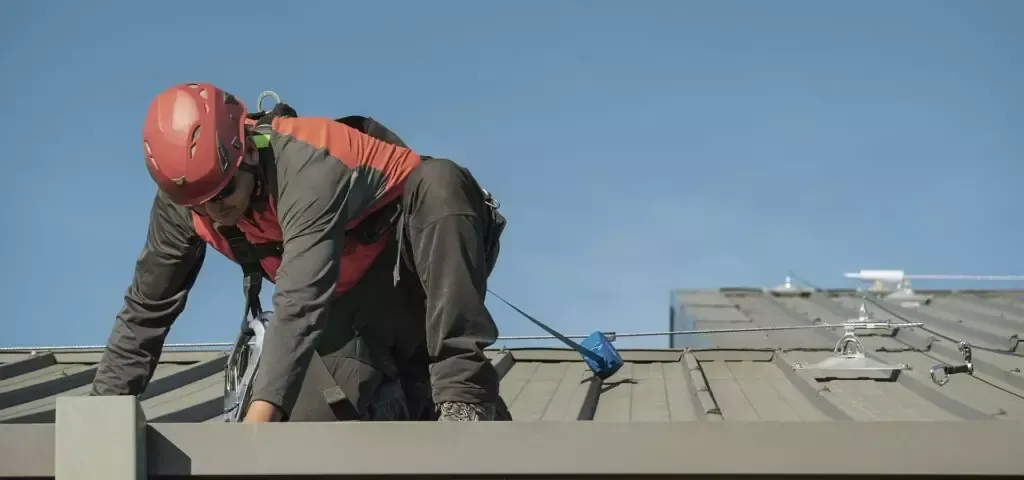
A horizontal lifeline is only as good as its connection to the roof. Before choosing components, start with the roof itself: what it is made of, how it is fixed and how much load it can take.
Standing seam roofs
Standing seam roofs can usually take a non-penetrating system. Clamps grip the raised seams, so there are no holes in the sheeting and no risk to the waterproofing. The seam profile must match the clamp exactly, so we always confirm it on site.
Trapezoidal and Kliploc sheeting
Trapezoidal sheet is fixed through the crests with base plates sized to the profile. Concealed-fix roofs such as Kliploc need dedicated clamps. In both cases the purlins below carry the real load, so their spacing and condition matter.
Concrete slabs and parapets
Concrete gives the most options: posts, edge anchors or wall-mounted brackets. Anchors in existing concrete should be pull-tested after installation to confirm the fixing.
What else to check
- The number of people who will be connected at once
- Fall clearance below the roof edge
- Corners and changes in direction
- Access points onto the roof
- Whether guardrails could remove the need for a harness altogether
Our engineers can survey your roof and recommend a configuration — including complete Groxx Gears lifeline sets for standing seam, trapezoidal and concrete roofs.